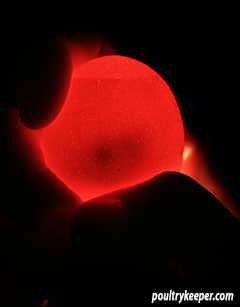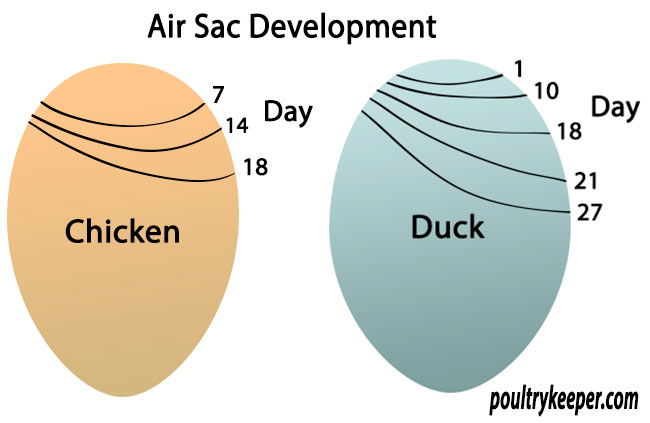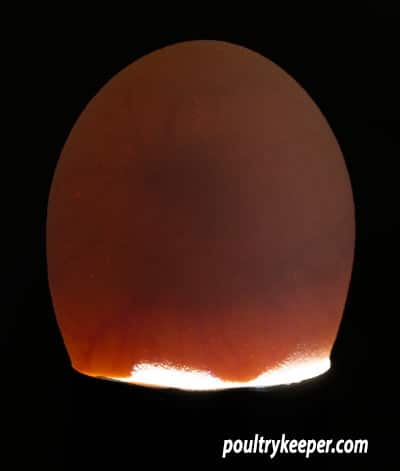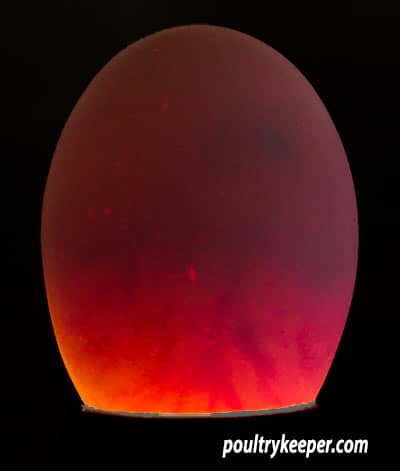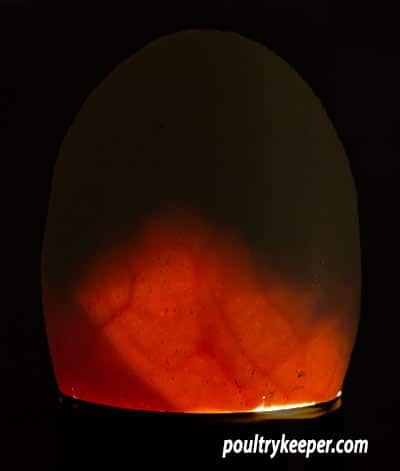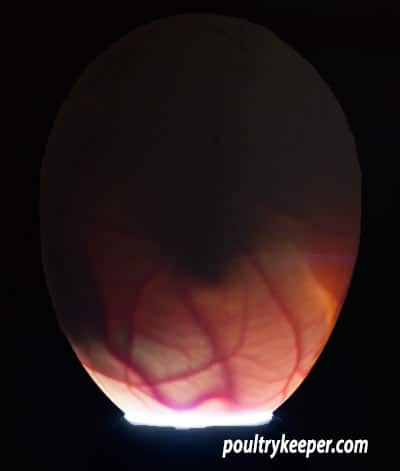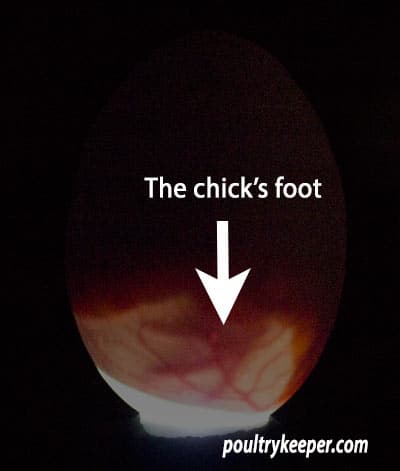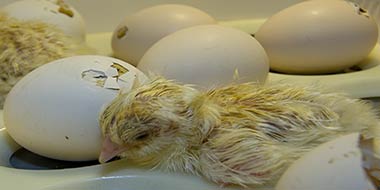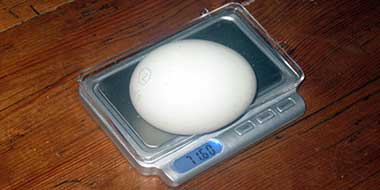

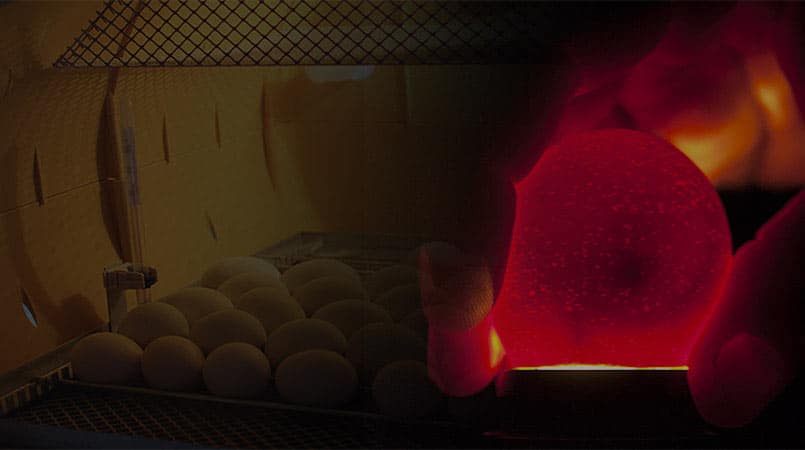
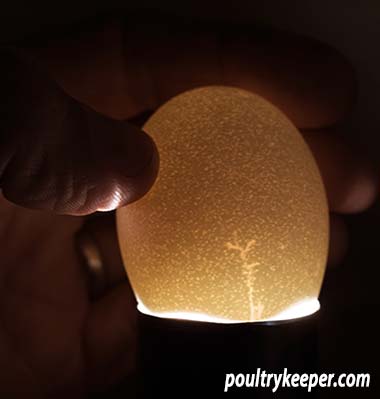
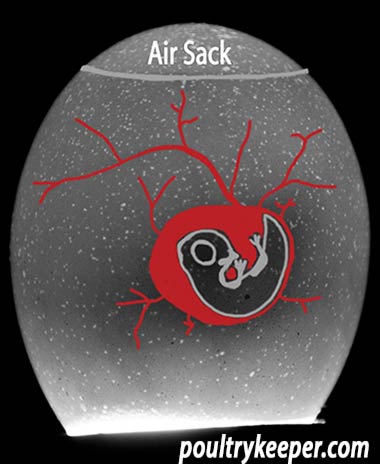
 After a week of incubation, place your egg onto your egg candler in a darkened room and turn on the light. You should be able to see shadows from inside the egg. With practice, you will identify fertile eggs by the dark dot, the embryo and the spider-like blood veins spreading out around the egg.
Sometimes, it’s hard to see the embryo, and it might be in the centre or opposite side of the egg. Rotate the egg until you get the best view. If you’re still not seeing it clearly, then it’s best to wait another day or two before trying again.
If the embryo happens to be up against the side of the shell, it will be much easier to see, and if you look carefully, you can sometimes see movement. If you are lucky, you may see the heart beating!
How can you tell an egg is fertile?
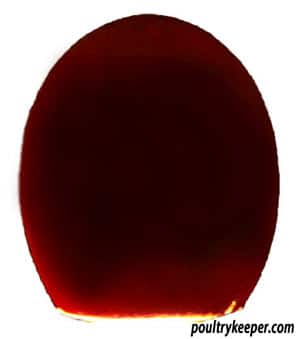
After a week of incubation, if an egg is fertile, you will see the embryo starting to develop as a dark spot with spider-like veins stretching out around it. Sometimes it isn’t possible to observe the embryo if it’s in the centre of the egg or if the eggshell is thick or a darker colour.
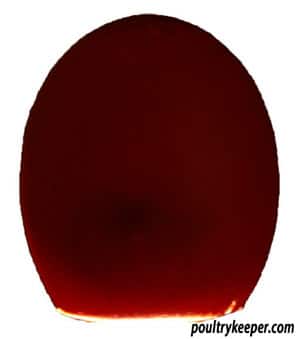
If an egg is infertile, you will only see the yolk’s shadow inside the egg without the embryo or veins. We sometimes call this a “clear” egg.
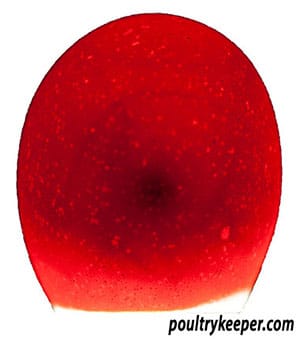
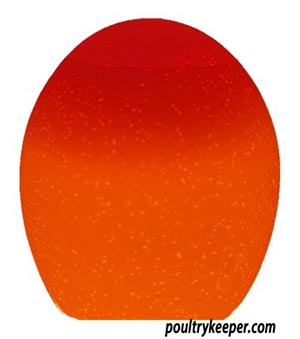
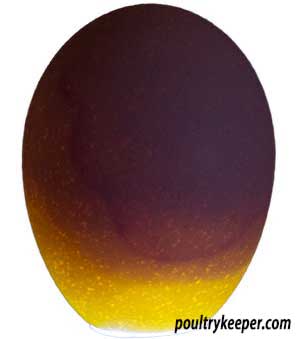
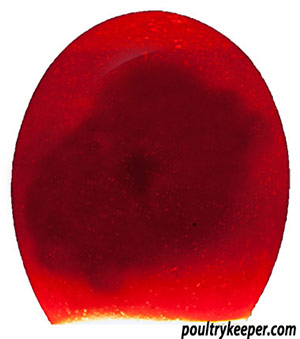
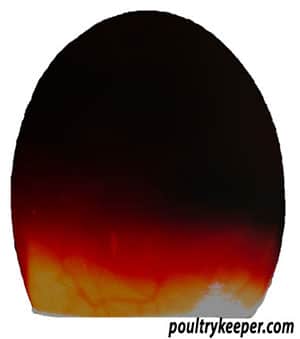
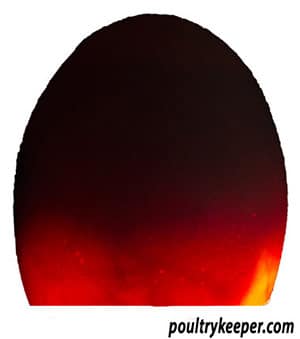
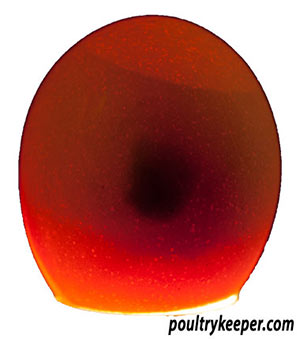


 Next time you crack open an egg, look carefully for a small white patch on the surface of the yolk about 3mm in size. This is called the blastodisc. This is where the sperm joins the egg. Once fertilised, the blastodisc changes its name to the blastoderm.
The blastoderm contains the chick’s genetic makeup, and it’s from here that the egg starts to develop. Blood vessels start to appear, stretching into the yolk to carry nutrients back to the embryo.
Of course, it would be great to be able to sex eggs before they hatch to save the heartache of raising unwanted male chicks! Various old wives tales circulate that say you can tell by circling a key or piece of metal on a string above an egg or that male chicks hatch from pointed eggs, females from round ended eggs. I’ve even seen ‘egg sexers‘ advertised on eBay where the seller says, “I don’t know how this works… it just does”.
Unfortunately, there is no proven way to tell the sex of an embryo in the egg, well, almost. The only proven way has been inserting a needle and taking a sample from inside the shell to see whether there was estrogen hormone present. Hardly a suitable method for the backyard keeper.
If there was an easy way, I’m sure the poultry industry would be using it now.
For autosexing breeds, or sex-linked crosses, you can determine the sex of day-old chicks, but for most pure breeds, you have to wait a while before you can sex them.
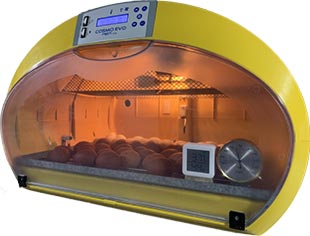
Incubator temperature should be maintained between 36 and 37.7°C (99° to 100°F); ideally, it should be set to average 37.5°C (99.5°F).
Too high a temperature is more damaging than too low a temperature. Mortality will increase if the incubation temperature drops below 35.6°C (96°F) or rises above 39.5°C (103°F) for several hours.