
Keeping a few domestic ducks in the garden is growing in popularity. Having kept ducks myself for over ten years, I can certainly see the attraction and understand why people are drawn to keeping a few of these webbed wonders. In this beginners guide to keeping ducks, I will cover all the basics you’ll need to consider before getting ducks.
Having spoken to a good number of waterfowl enthusiasts, I would estimate that nine out of ten people who keep ducks started by keeping chickens first. With that in mind, you may already have a good understanding of some aspects of poultry keeping.
There seems to be a common belief that ducks are more difficult to keep than chickens and that you need a pond or small lake to be able to keep them, which is true for wildfowl but isn’t true for domestic ducks, so let’s start by looking at the different types of ducks.
Choosing your ducks
There are four main types of duck: domestic, dabbling, diving and sea ducks. The first type, domestic ducks (or pet ducks, as some people call them), are the main focus of this article.
Domestic ducks, as the name suggests, are domesticated ducks that were bred in captivity, usually for a utility purpose such as for laying eggs or producing meat (and in the case of the noisy Call duck, for wildfowling (shooting wild ducks and geese) to decoy or ‘call’ to wild ducks).
Domestic ducks are all descended from the Wild Mallard, except for the Muscovy duck. Domestic ducks are classified into different breeds of duck, and breeders will aim to follow the Poultry Standard, which defines the breed’s characteristics.
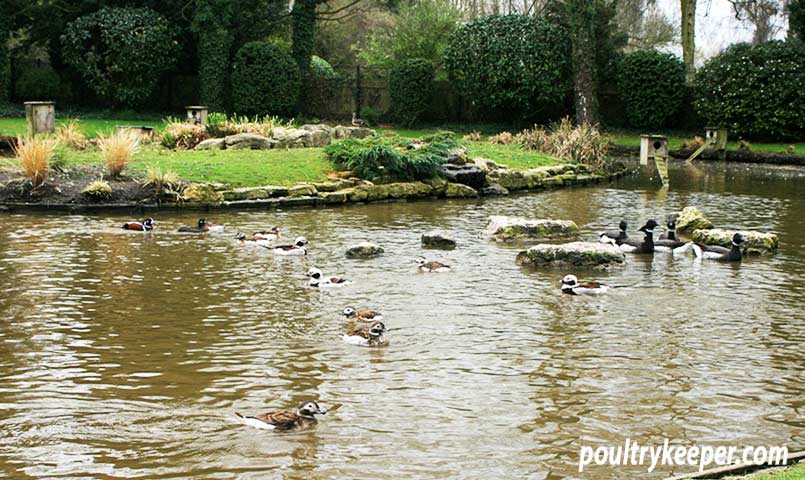
The last three types of duck are called ‘Ornamental Wildfowl’ or simply ‘Wildfowl’, and they spend a large proportion of their time on the water. For this reason, they require a suitable pond or lake and suitable habitat nearby for nesting. Wildfowl must have their wings pinioned, or their enclosure must be netted to prevent them from flying off and mixing with native duck species.
Keeping Wildfowl requires specialist knowledge, and if you are interested in learning more, I encourage you to join the British Waterfowl Association.
Domestic Duck Breeds
There are many different kinds of pure breed domestic ducks – you can see the ducks standardised in the UK on the Duck Breeds pages.
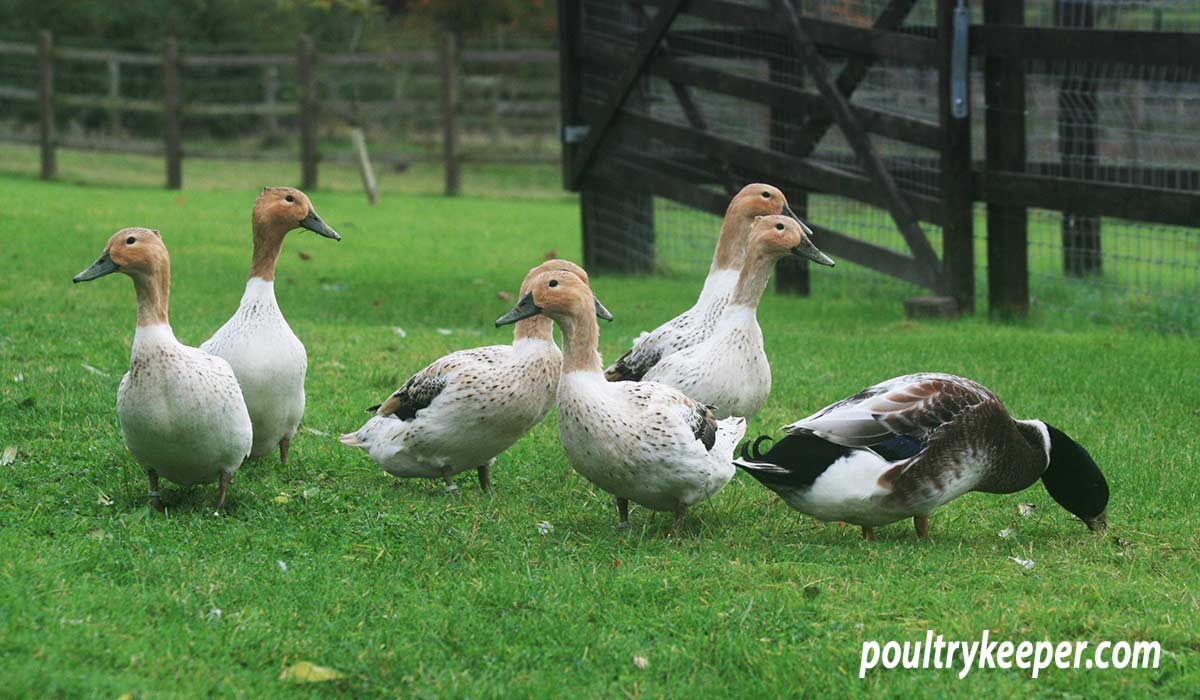
Domestic pure breeds are divided into categories of ‘Heavy’ (such as the Aylesbury or Pekin), ‘Light’ (such as the Abacot Ranger or Campbell), ‘Runner’ (which covers the many colours of Indian Runner ducks), ‘Bantam’ (such as the Black East Indian) and ‘Call’ (which covers the many colours of Call ducks).
Different breeds appeal to different people, but it’s worth keeping in mind the breed’s characteristics. Heavy ducks don’t generally lay too well and cost more to feed, so they are less popular. You will be supporting a rare breed if you select almost any of the heavy ducks.
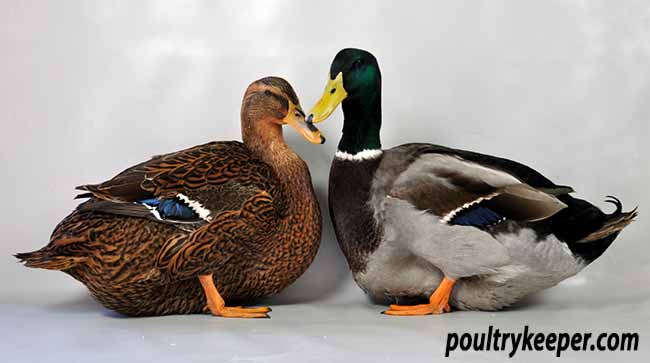
Light ducks are better layers and less costly to keep. You can expect a good number of eggs from them. Bantam breeds are more ornamental, but the little Call is the noisiest of breeds, so it is not a good choice should you have close neighbours.
If you have the patience, domestic ducks can become quite tame.
Water for domestic ducks
Domestic ducks need water, although not as much as you might imagine. They spend around 10% of their time on the water, whereas Wildfowl spend about 90% of their time on the water, which is why a pond is essential for them.
Plastic Water Tubs
A plastic water tub that can be tipped out and refilled daily is better than a small fixed pond that will soon get full of mud, muck and feathers
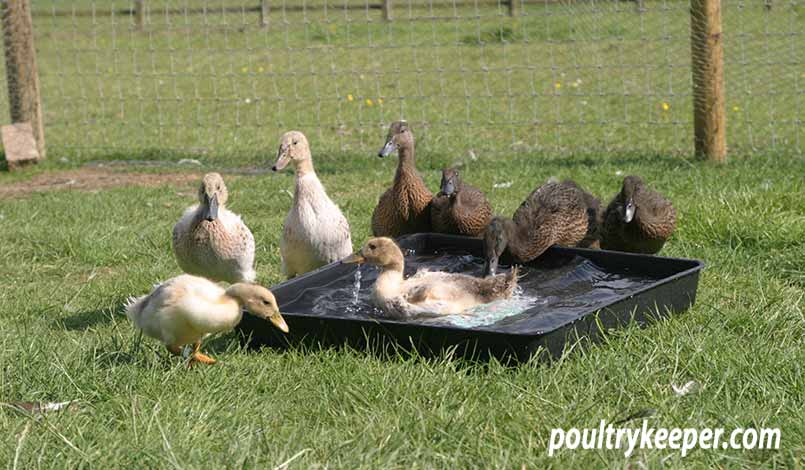
Plastic tubs can often be found in Garden Centers or builders merchants, and providing the water is deep enough for ducks to dip their heads (ducks have no tear ducts, so rely on water to wet and clean their eyes) and there is enough room for them to climb in to bathe, then they should be fine. You will spot many children’s plastic sandpits turned into duck baths in back gardens!
Remember, young children can drown in as little as an inch of water, so they must not have unsupervised access to the duck’s bath.
Predators
You will need to lock up your ducks at dusk. Unlike chickens that will go in random directions, you can guide ducks into their house simply by holding your arms and walking behind them.
If foxes visit your garden during the daytime, you will need a good-sized run that’s securely enclosed.
If you are fortunate enough to have a large pond in your garden, you will still need to consider security from predators at night. Although ducks will take to the water to escape predators such as foxes, domestic waterfowl often wander away from the pond. Foxes can take them before they make it back to the safety of the pond unless suitable fencing is provided for them.
An electric fence is a good option around the outer perimeter of their area. If the pond is big enough and you can get ducks used to going to an island, they will be safe there. An island might be natural or could be a floating artificial island.
If you are concerned about predators, see the poultry predators category, which will help you provide proper fencing and details many common predators, including the fox, which is the most common problem for us in the UK and many other parts of the world.
Feeding domestic ducks
You can feed adult ducks on layers pellets and wheat. I keep dry pellets in a hopper for them but place wheat into a half-sized bucket underwater. This softens the wheat and aids digestion, and stops crows and other birds from coming and having a free meal and potentially bringing in disease.
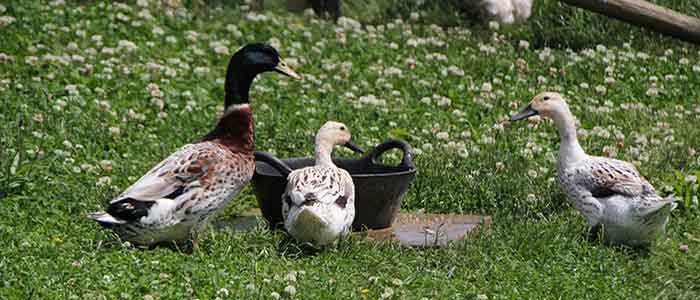
Pellets can be kept in a hopper with a rain hat outside or hung up inside their house if there is room; they must be kept dry either way.
Drakes or ducks that aren’t laying will eat more wheat and fewer pellets, but laying ducks need the extra calcium found in the pellets to produce eggs, making sure they can get to pellets as and when they need them.
Layers mash isn’t suitable for ducks because, mixed with water, it gets stuck in their bills, so it is best avoided.
Since this is a beginners guide to keeping ducks, I won’t go into too much detail. There is more information in my article on feeding domestic ducks if you need any more information.
Worming ducks
Ducks can get worms and may need to be given a wormer. It is advisable to get a faecal egg count (using a worm egg count kit) at least in the spring and autumn to see if they require worming.
There is a separate article that covers worming ducks.
Housing your ducks
Ducks need to be locked up at night unless they are in a predator-proof enclosure. They usually won’t put themselves to bed at night like chickens (ducks can see quite well at night and can be quite active), but they will often get into the routine of going to bed if locked up regularly.
Ducks are very easy to put to bed; if you hold out your hands and give them a cue (I say ‘bed ducks’), they will herd easily. You can steer them left or right by moving your hands or body, and you can guide them to the door of their house. It’s often best to place this next to a fence or wall so that they are cornered. Otherwise, a few will end up going around the house, and you’ll be chasing them for longer than needed.
Duck houses don’t need perches, although the doorway should be as wide as possible since ducks tend to do things together as a body and trample on one another if they are going through a small opening. If you would like to build your own, you might like to see the cheap chicken or duck house I made from an old shipping crate.
Just like chicken houses, ventilation is important. They can get spooked by lights at night so facing any openings away from the moon or lights is the best bet.
The differences to chickens
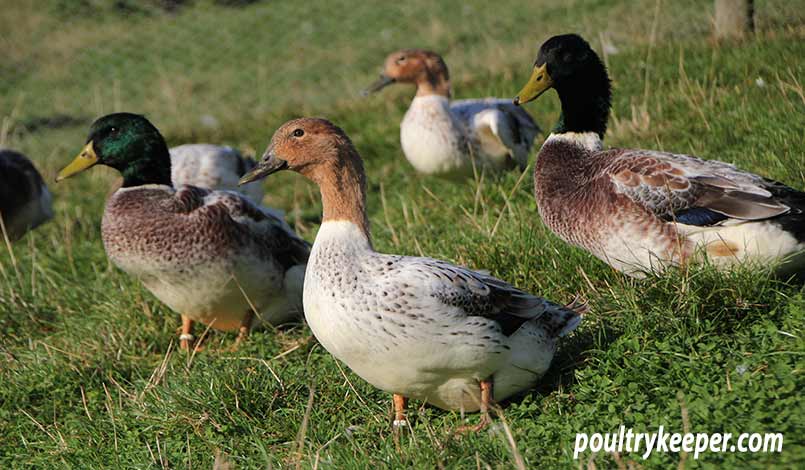
Although this is a beginners guide to keeping ducks, it is worth pointing out a few differences to chickens since so many people who start to keep ducks often began their poultry journey with chickens.
Except for Call ducks (which can be noisy, “calling” is what they were bred for!), ducks are quieter than chickens, so keeping a few ducks may well be the answer if you don’t want to disturb your neighbours.
If you allow your birds to free-range around the garden, chickens tend to scratch at everything, scattering mud onto garden paths as they search for worms and other delights.
Chickens will peck at most plants that are at the right height for them. On the other hand, Ducks will not bother so much with plants and don’t scratch up the ground with their webbed feet.
Young plants, especially vegetables, are vulnerable to both chickens and ducks and should be protected. This is easier to do with ducks as a 30cm high fence will suffice to keep most ducks out. Ducks will, of course, still rid your gardens of slugs, snails and many insects with far less damage than chickens. Poultry can go together with gardening with a little care.
If there is water and soil, you will find ducks soon find the magic formula for making copious amounts of mud! The best way I have found to deal with this is to keep ducks in a hard-standing enclosure or yard when it is very wet and either move baths around regularly or place them on some hard-standing where they can’t spend hours dabbling between the water bath and the soil.
If you are one of these nine out of ten people who keep chickens and are thinking of moving on to keeping ducks, then the two words ‘Red Mite’ probably make you a shiver. Well, the good news is ducks don’t usually suffer from red mite infestation – their feathers are so thick, and with the combination of oil on the feathers and them moving around at night, red mites can’t get to feed off ducks.
You can keep chickens and ducks together if they have enough space. Remember, chickens can cause severe damage with their sharp beaks, so you need to ensure there are enough feeders for ducks and chickens to be able to go about their business without interfering with one another.
Space is the key to allowing them to live in harmony.
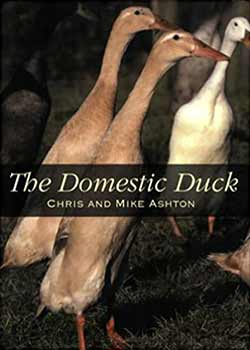
The
Domestic Duck
by Chris & Mike Ashton.
For further reading and as THE reference book to have on your bookshelf, I can highly recommend Chris and Mike Ashton's book "The Domestic Duck".
The book covers absolutely everything you’ll ever need to know about keeping ducks.
I can highly recommend it for beginners or the more experienced keeper. I wouldn’t be without this book on my shelf as a reference, and I am constantly dipping into it.
Ducks will soon empty a water container and make the ground surrounding it muddy. A tripod with 3 horizontal perches joining the legs about 30 cm off the ground works well. Hang the water container in the middle above the height that ducks can reach but at a level that the chickens can reach once they are on the tripod’s perches.
Feeding wheat in water as described above also works well, stopping chickens from eating the wheat but allowing the ducks to take it ad-lib.
Ducks are wonderful characters and lots of fun to keep. I hope this beginners guide to keeping ducks provides you with some inspiration and ideas to get started keeping ducks.
There are more articles in our keeping ducks category to help you learn more. Good luck!