Home Diseases & Disorders

diseases-f-r-poultry-book

Diseases of Free Range Poultry

Victoria Roberts

chicken-health-handbook

The Chicken Health Handbook

Gail Damerow

Poultry Diseases and Disorders

(New! - this area has just been published (Feb 3rd) and is still under construction....)

There are articles on specific poultry problems around the site but this section allows you to browse all of the poultry diseases and disorders you are likely to encounter in one place and provides links to the other articles around the site.

Examine your bird, then check their symptoms here to get an ideas of what could be wrong with them. Please remember this advice should not replace the advice of a qualified vet -  Whilst we have experience in keeping chickens, waterfowl and a few other types of poultry, we are not vets!

Worth a mention are "Diseases of Free Range Poultry" and "The Chicken Health Handbook", both very good books covering just about all diseases and disorders in a non technical way. Victoria Roberts' book in particular is an excellent read with information aimed at UK enthusiasts.

Respiratory

Disease-Disorders-Respiratory-thumbRespiratory System Problems.

Symptoms of typical poultry respiritory problems include: Runny / watery eyes, swollen sinusses, wheezing, sneezing, gurgling / rattling, and difficulty breathing.

Open the sliders below for more information about the respiritory system or a particular respiritory disease or disorder:


Gapeworm

Gaping-chickenGapeworms (Syngamus trachea) are included under 'respiratory system' since the adult worms reside in the trachea (or windpipe) and often produce a gurgling or 'tracheal rattle' that can be confused with respiritory problems. Gapeworm is common in pheasants but also affects chickens, guinea fowl and turkeys. Gapeworms can cause considerable losses in pheasants and turkeys. Gasping for breath or 'gaping' as it is known is the biggest sign of gape worm. Shaking of the head and neck stretching are also common. When birds are held, gurgling can often be heard. If a heavy infestation Gapeworms-chickenoccurs, death by suffocation will occur. Fully grown gape worms are 'Y' shaped and vary in size between 1 and 2cm long. They are blood red in colour (as can be seen in the second photo during a post mortem).


Photos courtesy of Janssen Animal Health


Other Names: Gapes, Red worms, Forked worms, Y worms.

Symptoms: Gasping (gaping), yawning, gurgling / respiritory distress, head shaking, loss of appitite,  and eventually coughing and choking

Area affected: Trachea (windpipe), bronchi and lungs.

Causes: Environment

Transmission: Via intermediate hosts such as earthworms or snails and directly by birds picking up eggs that have been coughed up, or passed out into faeces,

Diagnosis: Laboratory identification of eggs in faeces, gapeworms found in trachea by postmortem, some / all of the symptoms above. 

Prevention: A good worming strategy, rotating grazing areas, avoiding contact with ground where wild pheasants have been.


Treatment: Flubenvet 1% 60g is licensed for treating gapeworm. For heavy infestations (high epg or 'eggs per gram of faeces' determined by laboratory worm count) usually on heavily used ground or with high stocking density, it is usually necessary to worm again a little before the prepatent period (the time it takes from being laid as a worm egg to being a mature worm of egg laying age) to reduce high infection levels. Rotating the pasture really helps to break this cycle.

Prepatent Period: 18 to 20 days

Risk to Human Health: None known.

Links to Articles:


Mycoplasma Gallisepticum

Most backyard flocks these days are carrying Mycoplasma. There are many different kinds of Mycoplasma but Mycoplasma Gallisepticum is the most common. It causes respiratory disease and can weaken the birds immune system sufficiently for them to pick up any disease that they come into contact with. Small bubbles in the corners of eyes and swollen sinuses are is usually the first sign of Mycoplasma. Once birds have been infected, they become carriers and remain infectious for life. Some birds seem to have a good resistance to M.G. and out of an infected flock, a few may die, others may become ill and recover and some may not show any symptoms at all. The first time they are ill seems to be the worst and subsequent outbreaks seem to be milder.

Bringing new, perfectly healthy younger birds into an established flock of carriers is typically a problem. New birds can be Myco free but with the stress of being moved and not having much resistance to M.G. will become sick after a week or two of arriving and the established flock appears to be healthy.


Other Names: M.G, Chronic Respiratory Disease, CRD, Roup (in older poultry books), Stress Disease, Infectious Sinusitis (in Turkeys)

Symptoms: In growers: Loss of appetite, slow growth, In Chickens & Turkeys: Ruffled feathers, fluid in eyes (small bubbles in the corners of eyes), coughing, sneezing, 'darth vader' breathing, gurgling / rattling, swollen face, strained crow in cockerels, drop in laying in hens, sometimes loss of appetite, sweet smelling breath.

Area affected: Respiratory system (mainly) but can effect the Kidneys.

Causes: Mycoplasma Gallisepticum Bacteria.

Transmission: Infection from other carrier birds (from their respiritory dischages), including wild birds. Through hatching eggs. From infected dust / bedding material. Chicken and Turkeys can cross infect one another, other species have their own type of Mycoplasma that cannot cross infect. Mycoplasma is highly contagious and can be carried in on shoes, clothing and feeders / drinkers etc. Mycoplasma can survive for several hours on these things.

Diagnosis: Contact with wild birds or other carriers (poultry shows), bringing new birds in that are carriers, stress factors (change of food, house, worming, over crowding, new birds in the flock, weather - snow covering the ground for example, shortage of food or water, ammonia from soiled bedding). Breathing difficulty, laboratory identification of bacteria in post mortem. 

Prevention: Good biosecurity, minimise stress, vaccination is possible but is done via an inhaled mist and equipment to administer is expensive, keep birds immune systems strong with the right diet. Fresh crushed garlic in food or water is great for the immune system and Apple Cider Vinegar. After an infection, disinfect housing and leave for 2 weeks. Mycoplasmas cannot survive for long in the environment.

Treatment: Antibiotics from your vet: Tylan, Baytril, or Gallimycin. Tylan 200 injected into the breast muscle is usually the most effective. Treatment needs to be early on for a greater chance of recovery.

Risk to Human Health: None known.

Links to Articles:


Infectious Bronchitis

Infectious bronchitis (I.B) is the most contagious poultry disease. It has very similar symptoms to mycoplasma. The main difference is the number of birds it affects. Mycoplasma tends to affect a few birds in the flock but IB spreads within a few days to the whole flock. I.B. causes respiratory disease and kidney damage in growers and oviduct infection in adult hens which can cause wrinkled egg shells as well as a reduction in egg laying. It can also affect the ability of the bird to produce thick albumen (white). Commercial flocks vaccinate against Newcastle disease and infectious bronchitis at the same time. Survivors of IB are immune but will always be carriers. 


Species affected: All but especially turkeys and chickens.

Other Names: I.B, avian infectious bronchitis

Symptoms: . In growers: Gasping, coughing and wheezing / chirping. After a couple of weeks, sometimes nervous system problems - twisted neck, droopy wings, dragging legs. In adults: Wheezing, green droppings, soft shelled eggs or drop in egg production and later on, nervous system symptoms twisted neck, droopy wings, dragging legs, death. Sometimes mortality rate can be very high, especially during colder weather.

Causes: Coronovirus.

Transmission: By inhaling the virus via respiratory discharges from carriers or ingesting it via excretions e.g contaminated feed.

Diagnosis: Symptoms above and post mortem findings.

Prevention: Vaccination (Intervet) if in a high risk area, good biosecurity.

Treatment: Keep sick birds warm and watch for secondary infections. Vitamin suppliments in the water.

Risk to Human Health: None known.


Newcastle Disease

Newcastle disease is fairly common around the world but the UK doesn't have many outbreaks. The symptoms can be quite varied. Commercial flocks are vaccinated against Newcastle disease at the same time as they are vaccinated for infective bronchitis and all racing pigeons leaving the UK (and returning on their own!) are vaccinated against it. Importing birds from outside the EU isThe virus is quite tough, being able to survive in dead birds for many weeks afterwards. This is a notifiable disease in the UK.


Species: All but especially turkeys and chickens.

Other Names: Avian Distemper, Paramyxovirus, Fowl Pest

Symptoms: Can be quite varied. In growers: Gasping, coughing and wheezing / chirping. After a couple of weeks, sometimes nervous system problems - twisted neck, droopy wings, dragging legs. In adults: Wheezing, green droppings, soft shelled eggs or drop in egg production and later on, nervous system symptoms twisted neck, droopy wings, dragging legs.

Causes: Paramyxovirus.

Transmission: By inhaling the virus via respiratory discharges from carriers or ingesting it via excretions e.g contaminated feed.

Diagnosis: Symptoms above and post mortem findings.

Prevention: Vaccination (Intervet) if in a high risk area, good biosecurity.

Treatment: Isolate infected birds in a warm location, provide them with a good diet and a vitamin suppliment in their water.

Risk to Human Health: Infection to the eyes / conjunctivits with flu like symptoms. Usually temporary and should clear after a couple of weeks.


Don't forget - if in doubt - visit your Vet!


Digestive

Digestive-System

Digestive System Problems

Symptoms of typical digestive system problems include: Loss of appitite, a swollen crop, bad or sweet smelling breath, diarrhea, or messy bottoms.

Open the sliders below for more information about the digestive system or a particular digestive disease or disorder:


Gapeworm

See 'Respiratory Problems' tab.
 

Pullorum

Other Names: Bacillary White Diarrhea, BWD

Symptoms: In chicks: Loss of appetite, weakness, huddled, hunched up under heat lamp, drowsy, white diarrhea, sometimes a little green, death. In Chickens: increased thurst, green diarrhea, reduced egg production, shriveled up comb.

Area affected: Digestive System

Causes: Salmonella Pullorum bacteria. Destroyed by disinfectants but can survive for years in bedding material.

Transmission: Through eggs from infected birds, from contaminated surfaces or from chick to chick.

Diagnosis: From laboratory testing, symptoms above and the age of the birds.

Prevention: Good biosecurity, control rodents, flies and wild birds. Buy certified Pullorum free stock.

Treatment: Cull since birds that survive will continue to carry the disease. This is a reportable disease in most parts of the World.

Risk to Human Health: High - By eating contaminated meat. Symptoms are a high fever and prostration.

Links to Articles: None.


Don't forget - if in doubt - visit your Vet!


Reproductive

Reproductive-SystemReproductive System Problems.

Reproductive system disorders, including egg laying problems. Problems with eggs are covered under the Eggs tab.

Symptoms of reproductive disorders include infertility, hatching problems, laying difficulty or swollen abdomen and prolapse.


Open the sliders below for more information about the reproductive system or a particular reproductive problem:


The Reproductive System of a Chicken

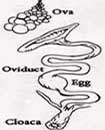
Reproductive-System-LargeA hen's reproductive system consists of two parts: the ovary and the oviduct. The ovary contains thousands of ova (see right) which can develop into the yolk and eventually an egg. A hen therefore has the ova of every egg she can ever lay inside her body.

An ova is placed into a yolk and when it reaches its final size, it breaks away from the ovary. This process is called ovulation. All eggs contain an ova and it is possible to see this in the yolk when you open an egg - it is called the germinal disc. The yolk enters the oviduct where the albumen (white) and the shell are added. Most female animals have two active ovaries and oviducts but hens only have one. The left ovary and oviduct is functional but the right ovary and oviduct are dormant. When a cock mates with a hen, he will deposit semen that will go into the oviduct and as the yolk passes through, the semen connects with the germinal disc (ova) and becomes fertilised.

The ovulation period of a hen is 24 to 26 hours so she will normally lay later every day. Hens in lay will lay an egg each day for about six or seven days. This group of eggs is known as a clutch. A clutch of eggs is followed by one or more days when the hen doesn't produce an egg. In practice, there are many factors that effect laying.

The process of egg laying is triggered by hormones in a hens body. The pituitary gland in her eye produces these hormones when it is stimulated by light. Chickens generally need about 14 - 16 hours of light per day to come into lay and (in the UK) will usually stop laying between November and January.

It is not possible to tell whether an egg is fertile or not until it is incubated when it can be candled and the development can be seen.


No Eggs or Stopped Laying

The ovary releases eggs when stimulated by a hormone. This hormone is produced by the pituitary gland inside the eye which in turn is stimulated by light. Chickens need around 16 hours of daylight to lay so during the darker winter months they will usually stop laying. In the U.K. they normally stop from November to February or early March. Young birds just coming into lay in early winter will sometimes lay at a reduced rate over the winter. This is especially true for hybrid chickens that lay larger numbers of eggs in a year. Some show strains of birds will lay far less eggs than the norm for their breed. This is often because of close breeding.

Birds will stop laying when they go through a moult which for most chickens is usually in late summer although they can moult at other times of the year too. Feathers are 80% protein so egg production is stopped so that feathers can be re-grown. Illness or disease will cause a reduction in eggs as will red mite, or heavy infestations of external parasites. The wrong diet - for example, a lack of protein or calcium (oystershell grit) will cause chickens to stop laying although modern poultry feeds usually contain the right balance.

If your hens become stressed, the egg production process can get disrupted for several days. Chickens are creatures of habit and are quite nervous about change. Things we might take as very minor can upset chickens. Changes in feed, housing, run, newcomers to the flock and even sudden weather changes can all upset chickens.

Articles: Chickens Stopped Laying


Tumors

Tumors are quite common in an older hens reproductive organs. This is an area that hasn't undergone a great deal of research since most studies are done for commercial reasons and only young hens are used in commercial production. Only a few causes of tumors are known such as Marek's Disease and Lymphoid Leukosis. Reduced egg production from hens with a tumor is common.


Don't forget - if in doubt - visit your Vet!


Eggs

wrinkled-egg-cut-outEgg Problems.

For egg laying problems, see Reproductive System. Typical egg problems are soft or missing egg shells, wrinkled or misshaped eggs, watery whites, double or multiple yolks and worms or blood spots inside eggs.


Open the sliders below for more information about egg problems:


Mini Eggs

Mini Egg in an egg box

Mini eggs are about quarter of the normal size. They usually don't have a yolk inside, just the ‘white' or albumen and is caused by a small foreign object entering the oviduct and triggering the normal formation of an egg. Normally only one mini egg is laid and it is nothing to worry about.


Photo Courtesy of Melanie Catley


Double or multi-yolk eggs

double-yolkerDouble or multi yolk eggs whilst very enjoyable are actually a fault. They are common in young, laying hens, especially from hens that are from highly productive strains. A double yolk egg is formed when two ovulations take place almost at the same time and go down the oviduct together and both get encased in shell.

Articles: Double Yolk Eggs


Soft, Thin or Missing Egg Shells

Soft or missing egg shells are quite common in older older birds, especially high production hybrids and especially as they come out of lay for the season.
In younger hens, sometimes an egg stays in the shell gland for too long (see calcium coated shells) and the egg that follows it doesn't spend long enough. In these circumstances, the two eggs are laid closely together on the same day.
Thin egg shells can occur on hot days when the temperature rises. This is associated with a lower food intake and shell thickness will return to normal when the temperature drops and the food intake returns to normal.

Articles: Chickens Laying Soft Shelled Eggs


Watery Whites

As birds get older, the quality of the egg they lay will deteriorate. Older birds will lay eggs that have more watery whites. Some diseases such as infectious bronchitis can affect the ability of the bird to produce thick albumen (white).


Blood Spots in Eggs

Blood spots are usually found in or just next to the yolk. A tiny blood vessel in the ovary gets broken which leaves a little spot of blood next to the yolk as it passes through.

Highly active hens around the time of ovulation can increase the chances of blood spots in eggs. Rutin is a substance found in grass which helps to stop bleeding, so you may find hens that produce eggs with blood spots in them improve if they have a good supply of fresh grass or free range grazing. Commercially, eggs go to packing stations where they are candled before being packed and sold. Eggs with blood spots are removed and used in processed food. You can still eat eggs with blood spots, it's just not very appealing to most people. Blood spots seem to be more common in chickens than other poultry.


Meat Spots in Eggs

Meat-SpotMeat spots in eggs are usually found in the albumen (white) rather than near the yolk like blood spots. They are brown in colour and are made up of small pieces of body tissue, from the lining of the oviduct.

Meat spots appear more in older hens or hens with poor health but also vary according to the breed and the strain of the bird. They are more common in chickens than other poultry.


Calcium Coated Shells

Sometimes an egg gets coated in calcium. It looks very white and powdery on the surface of the shell. Sometimes the egg can look a pinkish colour. This is usually caused by the egg staying in the shell gland for too long. Young hens that are stressed in some way can be susceptible to this when they are ready to lay because they will hold on to the egg for too long.


Wrinkled Egg Shells

wrinkled-eggs-largeIf the white is watery, it is harder for a shell to be built correctly around it. Some diseases such as infectious bronchitis can affect the ability of the bird to produce thick albumen (white) and a wrinkled shell can be the sign that the bird has had a viral disease such as infectious bronchitis.


Bacterial Contamination

Bacteria exist on the surface of all eggs. Egg shells are porous, however there is a protective layer deposited around the shell of an egg when laid (which is why eggs can look wet when they are ‘just laid') to stop bacteria from entering the egg through the pores. This is the reason it is best not to wash eggs before storing them. During incubation or warm weather, bacteria multiply and can sometimes get through the shell and multiply within the egg. If you candle the egg, it will often have dark, irregular patches.


Don't forget - if in doubt - visit your Vet!


Skeletal & Muscular

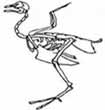
chicken-skeletonSkeletal and Muscular Problems.

Lameness, splayed legs, legs or wings pointing in odd directions, inflamation of joints are all typical symptoms of skeletal and muscular disorders. Most skeletal and muscular problems are caused by the incorrect diet which is a good starting point.


Open the sliders below for more information about the skeletal or muscular system or a particular disease or disorder:


Lameness or Off Legs

The most common reason for waterfowl to go lame or off their legs is when they have worms. In old birds, lameness can be caused by arthritis. Mycoplasma Synoviae (see tab below) can cause the hocks to become infected that causes lameness and Marek's disease can cause birds to lose their legs. Fast growing meat chickens suffer from leg problems due to their large size / weight and rate of growth. Some leg problems are heriditary. Tenosynovitis or tendon inflamation can be painful for older birds. Kidney disease causes lameness or loss of the legs because the nerve that goes to their legs passes through the kidneys. Diet should be considered but these days most people feed balanced diets in the form of pellets or mash which reduces the chance of this being a problem although one common cause for Turkeys / Waterfowl or Guinea Fowl to go off their legs is feeding chick crumbs or growers pellets to them that contain anti-coccidiostats (ACS) designed to prevent coccidiosis in young chickens. These birds will eat more than chicks and will effectively be having an overdose of the drug.


Slipped Tendon

Slipped-TendonA slipped tendon is most common in fast growing hybrid meat chicks although it can affect pure breeds from time to time. Using out of date chick crumbs is the most common cause since the vitamin b content is low in out of date food. As can be seen in the photo, the leg is held out and twisted.

In severe cases, the chick will not be able to eat or drink and is better off being dispatched.


Species affected: Usually fast growing hybrid chicks

Other Names: Perosis

Symptoms: . In chicks and young growers: Week old chicks and growers get swollen hock joint and will usually hop but sometimes one or both legs twist to the side.

Causes: Lack of manganese or vitamin B and genetics.

Transmission: Nutritional.

Diagnosis: Symptoms above, post mortem, analysis of feed.

Prevention: Use fresh chick crumbs (in date). Vitamin suppliments in the water, genetic selection, avoid over crowding.

Treatment: Vitamin B and manganese suppliment to reduce the damage (will not reverse the problem).

Risk to Human Health: None known.
 

Mycoplasma Synoviae

Mycoplasma Synoviae bacteria often infect birds when their immune systems are low, such as when they have Infective Bronchitus (a cold) and seems to strike more during cold, damp weather. Birds that die usually die because of a secondary infection that takes hold whilst the bird is weak.


Other Names: M.S, Infectious Synovitis, Enlarged Hock Disease

Symptoms: Slow growth (for young birds), pale comb, lameness and followed by ruffled feathers, greenish droppings with excess white urates, blue comb, sometimes swollen hocks and feet that are hot to touch.

Area affected: Joints, especially the hocks.

Causes: Mycoplasma Synoviae Bacteria.

Transmission: Infection from other carrier birds (from their respiritory dischages), including wild birds. Through hatching eggs. From infected dust / bedding material. Chicken and Turkeys can cross infect one another, other species have their own type of Mycoplasma that cannot cross infect. Mycoplasma is highly contagious and can be carried in on shoes, clothing and feeders / drinkers etc. Mycoplasma can survive for several hours on these things.

Diagnosis: Contact with wild birds or other carriers (poultry shows), bringing new birds in that are carriers, stress factors (change of food, house, worming, over crowding, illness, new birds in the flock, weather - snow covering the ground for example, shortage of food or water, ammonia from soiled bedding). Laboratory identification of Mycoplasmas Synoviae bacteria in post mortem. 

Prevention: Good biosecurity, minimise stress, keep litter dry, vaccination is possible but is done via an inhaled mist and equipment to administer is expensive, keep birds immune systems strong with the right diet. Fresh crushed garlic in food or water is great for the immune system and Apple Cider Vinegar. After an infection, disinfect housing and leave for 2 weeks. Mycoplasmas cannot survive for long in the environment.

Treatment: Antibiotics: Tylan, Baytril, or Gallimycin. Tylan 200 injected into the breast muscle is usually the most effective. Treatment needs to be early on for a greater chance of recovery.

Risk to Human Health: None known.

Links to Articles: None.


Don't forget - if in doubt - visit your Vet!

 
Cardiovascular & Organs

Cardiovascular and Major Organ Problems.

Open the sliders below for more information about the Cardiovascular system or a particular disease or disorder:


Acute Heart Failure

Accute heart failure is commonly called a Heart Attack.


Species affected: Chickens, more common in the larger breeds.

Other Names: Accute Death Syndrome, Sudden Death Syndrome, Heart Attack.

Symptoms: Dead for no apparent reason, with no previous ill health. More common in large fowl cockerels or broiler type birds that are gaining weight too quickly, they suddenly drop dead. Neck is usually stretched out, bird is often found on its back. During the heart attack, legs usually kick, rolls over wings stretched, gasping and eyelids close and the bird is dead within a minute or two.

Area affected: Heart

Causes: Unknown - Could be the heart cannot take the rapid weight gain in fast growing broilers.

Transmission: Genetic, applies to specific breeds and strains.

Diagnosis: Post Mortem can show heart attack or the symptoms above if you see it happen.

Prevention: Grow fast growing hybrids slower, choose a slower growing hybrid, in large show strains of birds, don't select for and therefore increase size too much.

Treatment: None.

Risk to Human Health: None.


Don't forget - if in doubt - visit your Vet!

 
External

Disease-Disorders-External-thumbExternal Problems - feathers, beak, skin, comb, and nails.

This section covers external problems like feather loss, overgrown beak or nails and comb problems.


Open the sliders below for more information about the external problems or disorders:


Moulting (Feather Loss)

Moulting-ChickenFeathers get tatty over the course of a year, so it is perfectly normal for birds to replace them from time to time.

Chickens shed their feathers in late summer / early autumn but they will sometimes go through a partial moult at other times of the year too. You will see lots of feathers around their run when they are in moult and the birds will look scruffy. Some chickens can look almost oven ready! Growers will shed their feathers twice during the first 6 months of their life although this is a much more gradual process and visually, youngsters still carry lots of feathers.

Waterfowl lose their flight feathers in one go which is different to most species of bird. They keep their inner down feathers but will pluck these themselves to line nests. They moult at the time of year when they would normally be looking after their (flightless) young in the wild and escape predators by taking to the water rather than flying off during this time.

  • Geese moult once per year - both goose and gander moult at the same time - when the youngsters are a few weeks old. It takes them 3 or 4 weeks to replace their feathers.
  • Ducks moult twice per year. Ducks and drakes moult at different times to one another. The drake moults into very colourful plumage for the spring breeding season to attract a mate but moult again into more camoflage feathers for the summer to avoid being spotted so easily by predators.

Links to Articles: Chickens Moulting, Eclipse Plumage in Ducks.


Don't forget - if in doubt - visit the Vet!


Copyright © 2010 poultrykeeper.com. All Rights Reserved.