
Light For Chickens
Hens kept under natural daylight hours will lay the majority of their eggs during the spring and summer months. As the days shorten, egg production will decrease, and most pure breeds and hybrid hens will stop laying over the winter months.
We can use a chicken coop light for chickens to keep them laying during the darker months. This guide will tell you how you can use artificial light for chickens. Combined with the correct feed, you can trick hens into laying eggs during the winter.
Chickens lay eggs naturally as part of their reproductive cycle during the spring and early summer months when the daylight hours are increasing.
Female chickens have two ovaries, although it is only the one on the left that is functional. A hen is born with thousands of embryos, many which go on to become eggs.
A few environmental factors such as temperature, courtship and nesting territory stimulate the ovary of birds. Still, in chickens, the most significant stimulant by far is the changing pattern of daylight hours and darkness or photoperiodism.
Light hits a small gland at the back of the eye, called the pituitary gland which in turn produces a hormone that stimulates the ovary.
Chickens stop laying eggs in winter when the daylight hours reach a level that signals the end of their reproductive cycle.
Different breeds of chickens produce different numbers of eggs and will stop laying at different times.
To get eggs during the winter months, you have to use artificial light for chickens to trick them into thinking it’s springtime.
There is a considerable debate on the ethics of tricking chickens (over 20 weeks) into laying eggs during winter.
A hen is born with all her embryos so has all the eggs she can ever lay in her body, there are more than she needs, so by increasing her laying period, she won’t ‘run out of eggs’.
Egg-laying places considerable stress on the body though, and commercially, hens are (given the right nutrition) pushed to about 15-18 months before egg quality and quantity falls. They replace these hens with a new batch while they are still relatively young.
As backyard chicken-keepers, we often keep our hens for their entire lives and don’t usually want to push them to this extent.
Personally, if I need to bring my hens into lay a month or two earlier, I will use lighting, but I don’t push them any more than this. I believe their bodies need a rest period.
There is a balance between being ethical and being practical, and it’s up to you to decide how much to push your hens.
Lighting affects the age at which pullets (chickens under 20 weeks of age) come into lay, the size of their eggs and the number they will lay.
Prolapse is more common if pullets have not reached sexual maturity. They will not always grow to their full size because they are diverting resources into egg production.
Left to mother nature, chicks hatch in spring and pullets mature on decreasing daylight hours in late summer.
If you raise pullets out of season on increasing daylight hours, you are triggering reproduction and speeding up maturity.
It is not advisable to add light to start pullets laying before their bodies are ready to support egg-laying.
If you must use lighting for pullets, they should be kept on a regular 10 hours of light, or decreasing light.
Chicken coop lighting
To get eggs during the darker days of winter, we have to trick a hen’s body into thinking it’s spring and support her with the nutrition she needs to lay eggs.
Commercial egg-producers rely on using artificial lighting for their hens, and a great deal of research has gone into the ideal lighting period and feeding regime for hens to achieve maximum egg production over a laying period of fifteen months, or longer.
You will see different suggestions online that have often originated from information aimed at commercial egg production; however, for a backyard flock, I would recommend the following to extend the laying period:
Provide a fifteen-hour day-length
The natural day-length for birds kept outdoors should be calculated from one hour after sunrise to one hour before sunset. When the day-length falls below fourteen hours, add light to your chicken coop.
Fifteen hours provides a critical amount of light to trigger photoperiodic hormones that cause egg-laying and enough time for hens to eat sufficiently to produce eggs.
Nine hours of darkness provides enough time for birds to rest.
Add light during the morning
Chickens take time to roost at dusk. An ‘artificial sunrise’ stops hens from being plunged into darkness when the lights go out before they have been able to roost.
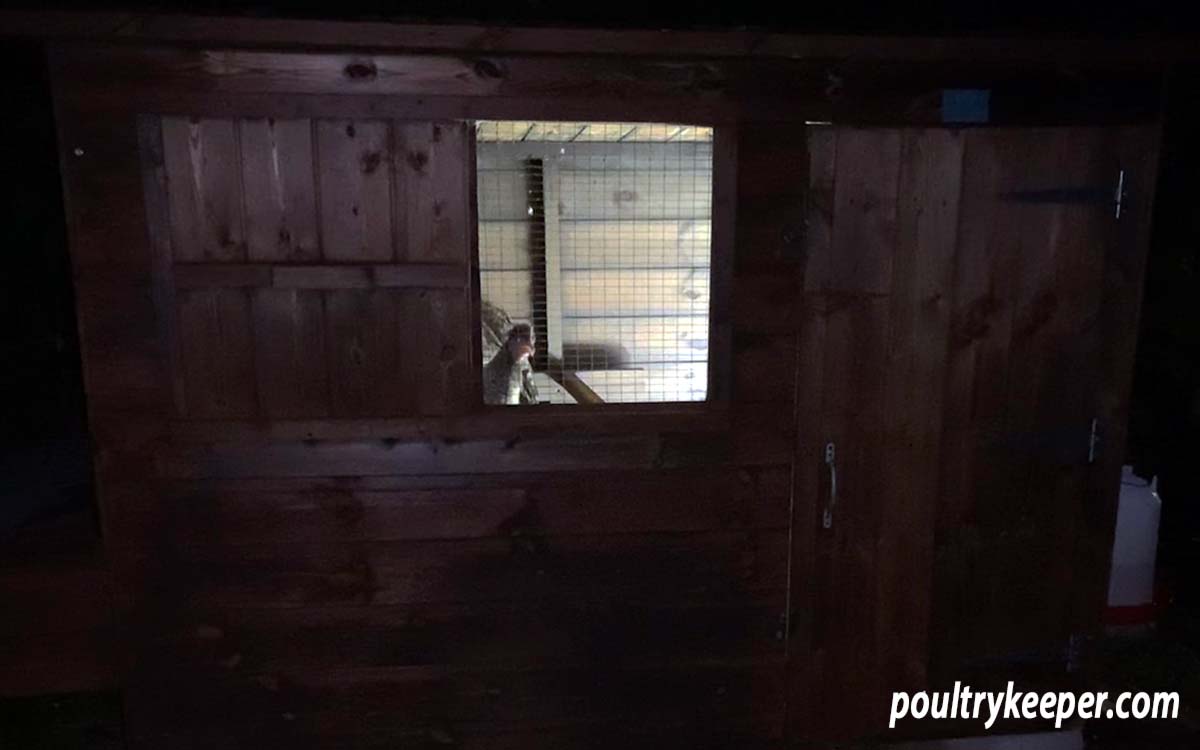
Artificial chicken coop lighting can be set on a timer to provide additional light in the morning as an ‘artificial sunrise’.
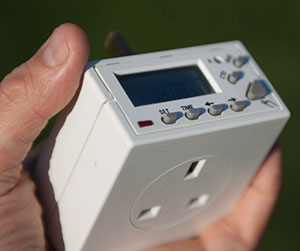
Once the hens are laying, you must not decrease their hours of light, or they will stop and go into a moult. Increase the ‘top-up’ lighting to keep daylight hours constant as the evenings become shorter.
If they miss just one day of lighting, it can trigger the end of the laying cycle.
Light intensity
The light intensity should be approximately 50 lumens (good enough to read a book). Make sure feeders and drinkers are well lit, underneath the light and that there aren’t too many shadows. Nest boxes should not be well lit.
Low energy light bulbs can hang from the roof of the coop, but my own preference is to use an LED lighting strip which gives monochromatic light from different wavelengths. Having a strip light with multiple light sources helps to reduce shadows and LED has several advantages over conventional lighting, including high energy efficiency, long life, high reliability and low maintenance costs.
Nutrition
In nature, the increasing daylight hours and the subsequent onset of egg-laying corresponds with an increase in food supplies during the warmer spring months.
Egg-laying places additional nutritional needs on your hens, so as well as providing the correct lighting for your hens, you should ensure you are feeding your chickens correctly.
Moulting
When your hens have a decrease in daylight hours, they will start to moult. They will lose their feathers gradually and replace them with new ones.
Moulting will naturally occur in the autumn, before the cold winter weather. Good layers will moult quickly and late in the season, but if you delay the moult by using artificial lighting, be aware the weather may be colder when they don’t have many feathers.
This is an excellent reason to add light for chickens at the start of the laying period to start them laying early, rather than extending the laying period into autumn.
There is much more information in my guide to chickens moulting.
An alternative to chicken lighting
Pure breeds of chickens will stop laying during the winter months, but good hybrid hens can start laying during the winter months although, at a reduced rate.
Some commercial Warren/Goldline hens will also lay through the winter during their first year.
As a rule of thumb, I have found I can buy a few hybrid chickens around September time (in the UK/Northern hemisphere), and they will usually start producing a few pullet-sized eggs 3-6 weeks later.
Over the winter, our chickens need a little extra care. My article Keeping Chickens in Cold Weather provides some tips to help.
Good luck with your winter eggs!
References
1. Science Direct: Effect of fluorescent vs. poultry-specific light-emitting diode lights on production performance and egg quality of W-36 laying hens.
2. Storey’s Guide to Raising Chickens – Gail Damerow.